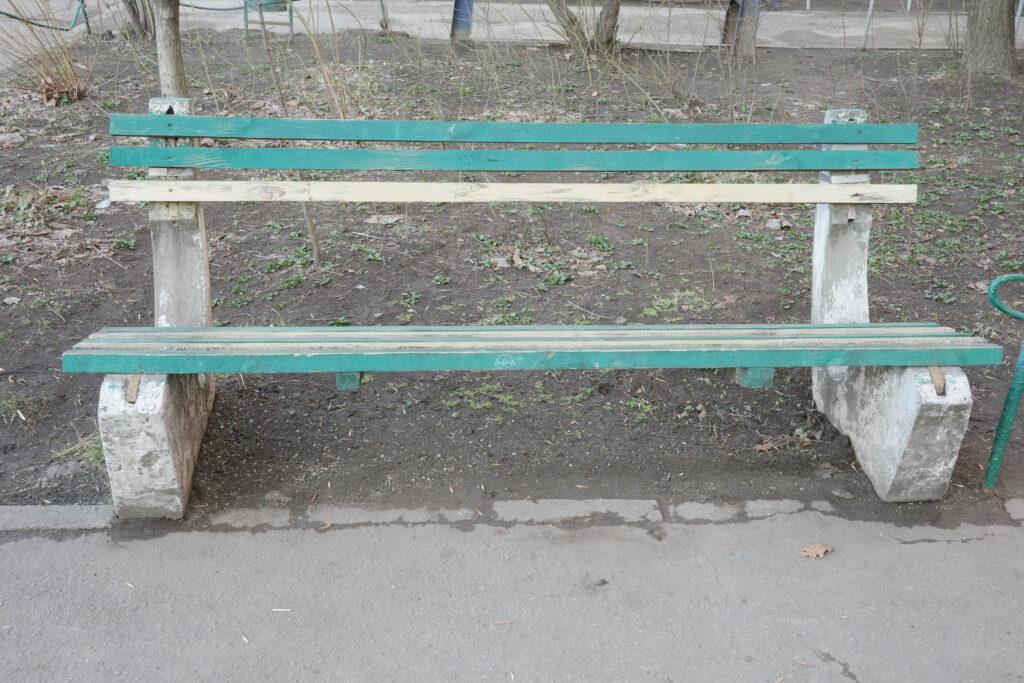
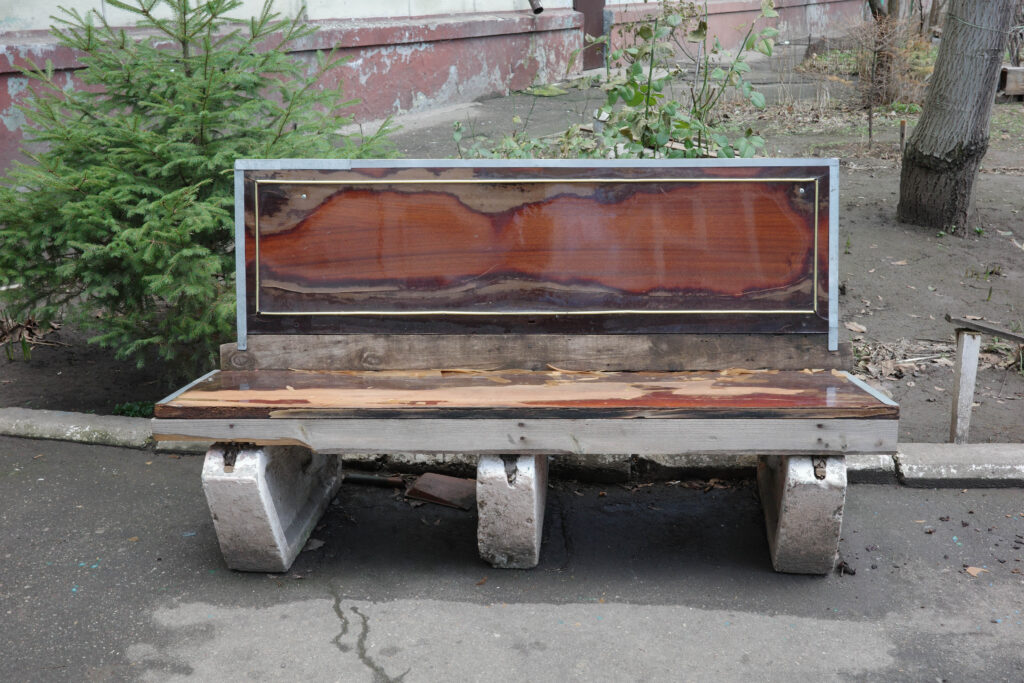
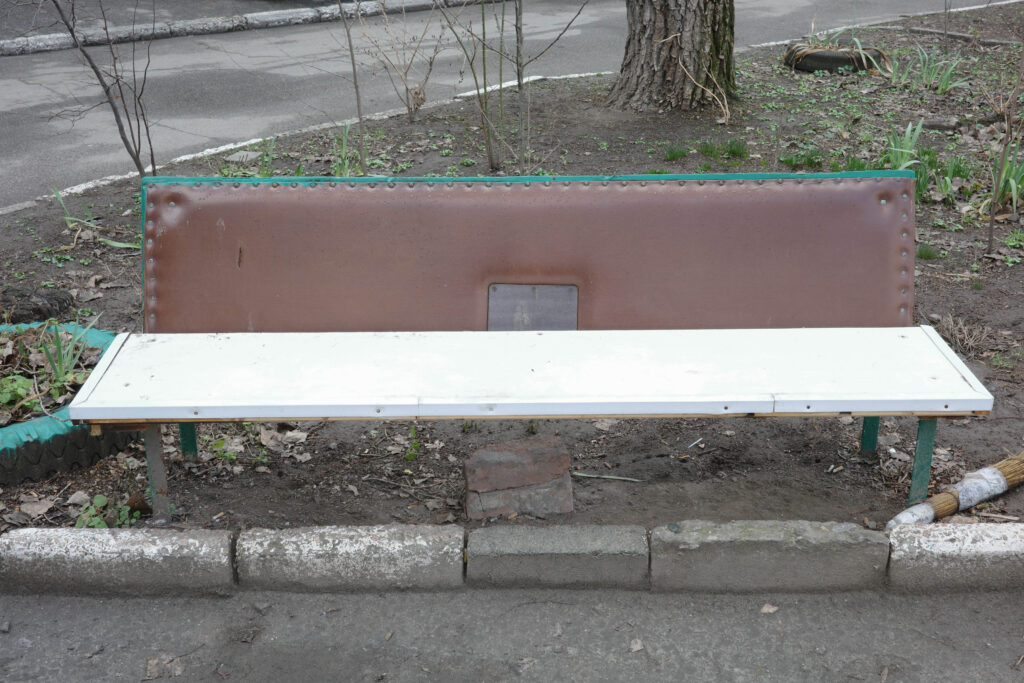
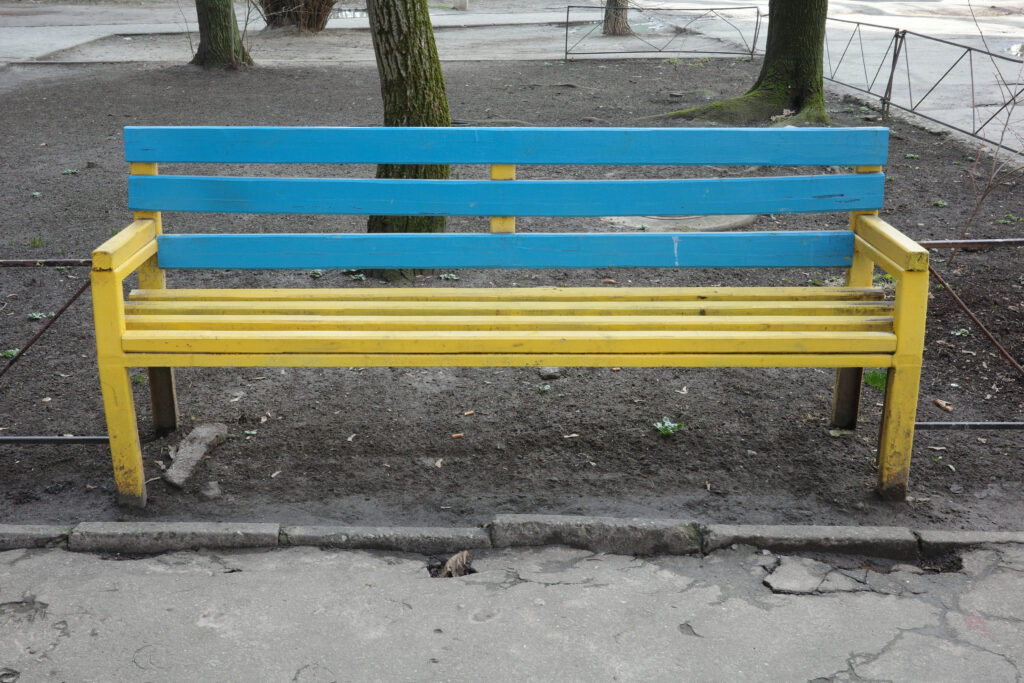
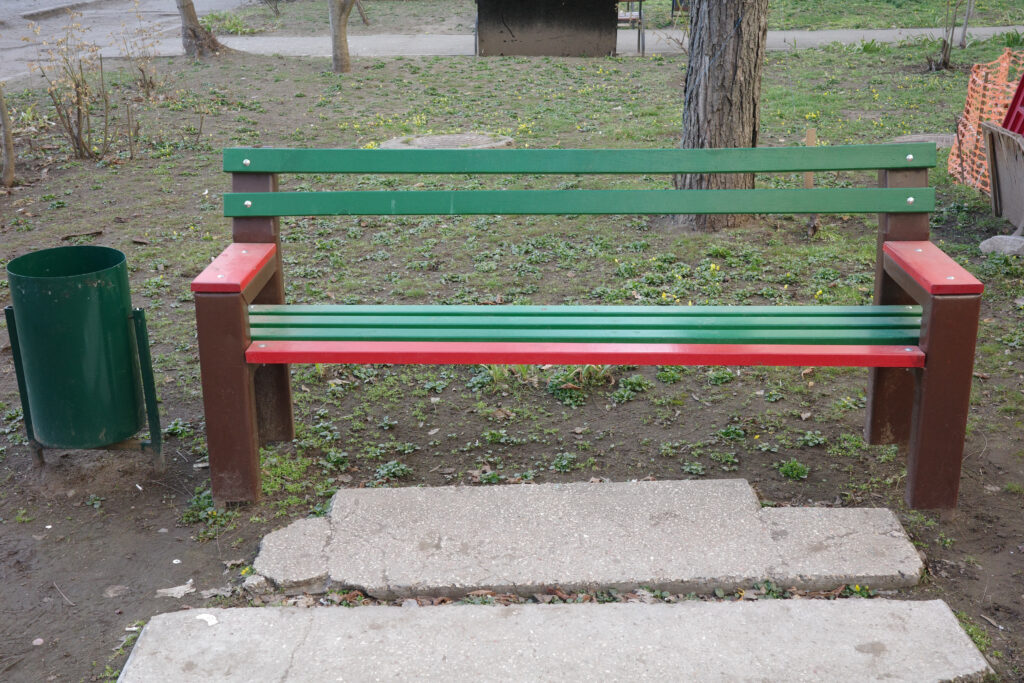
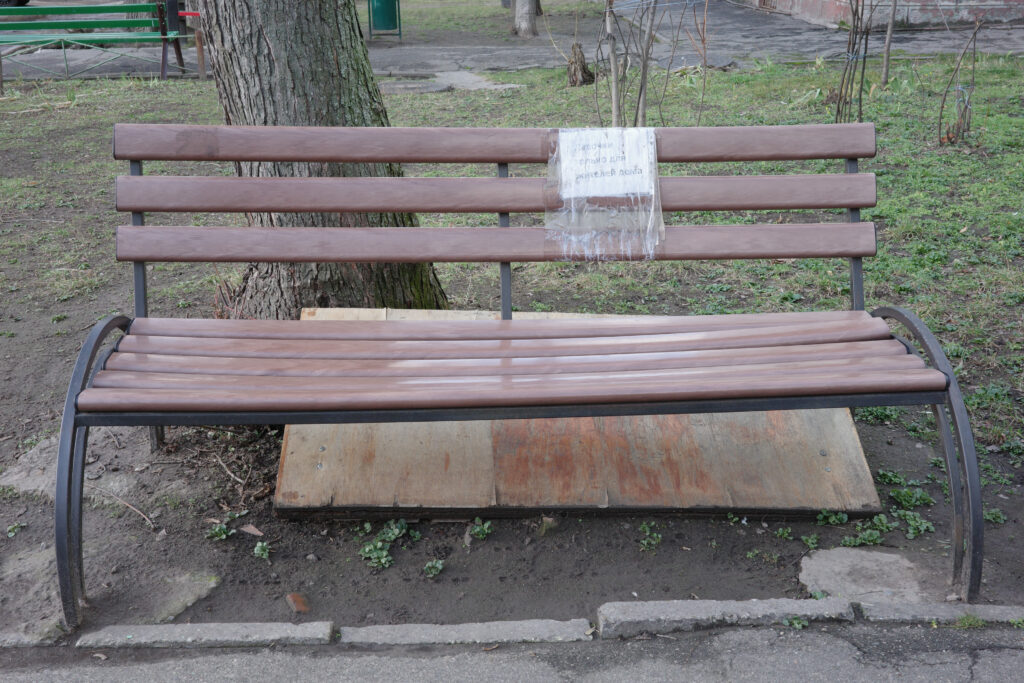
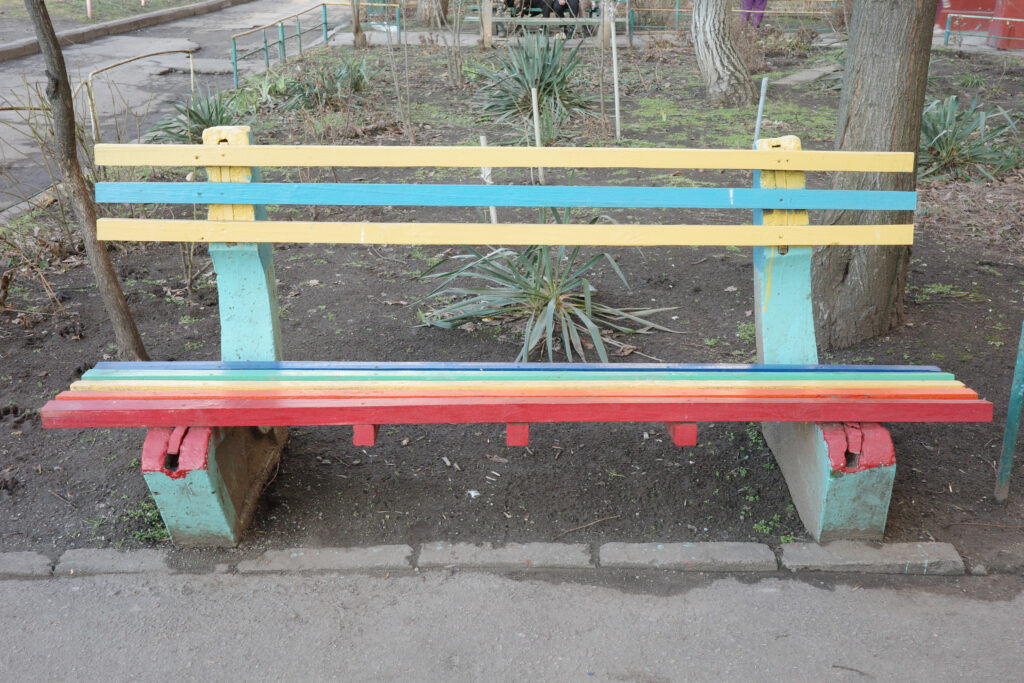
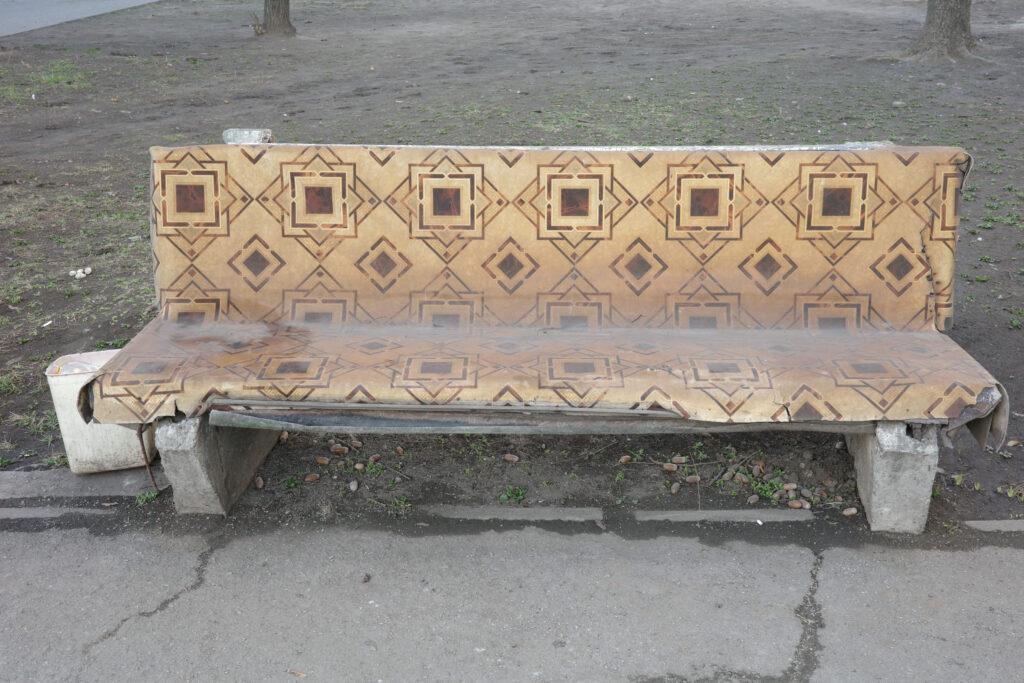
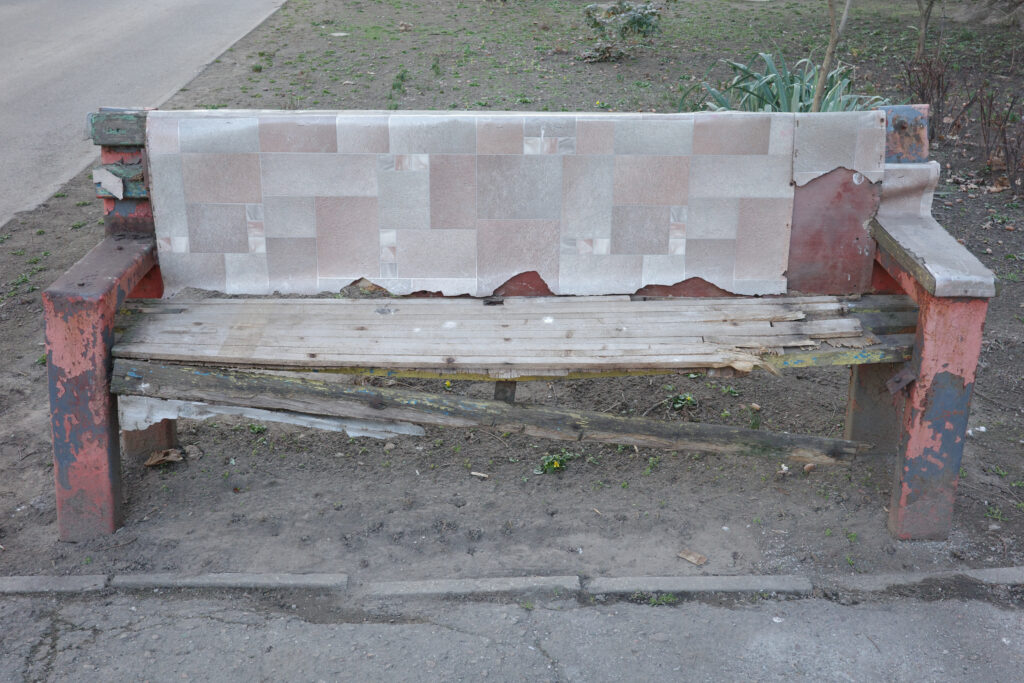
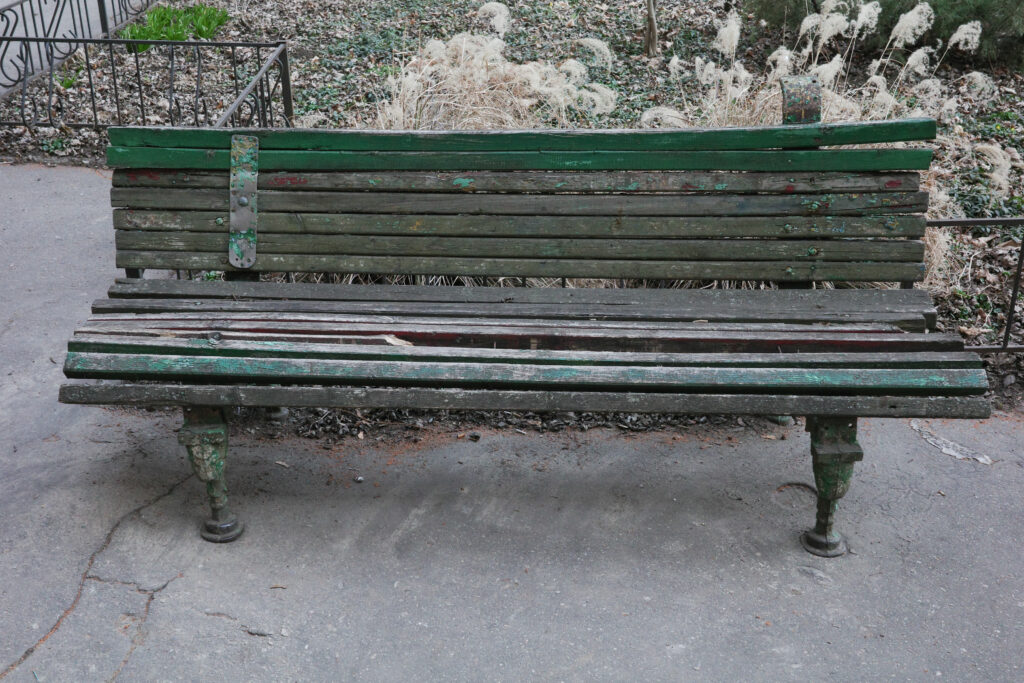
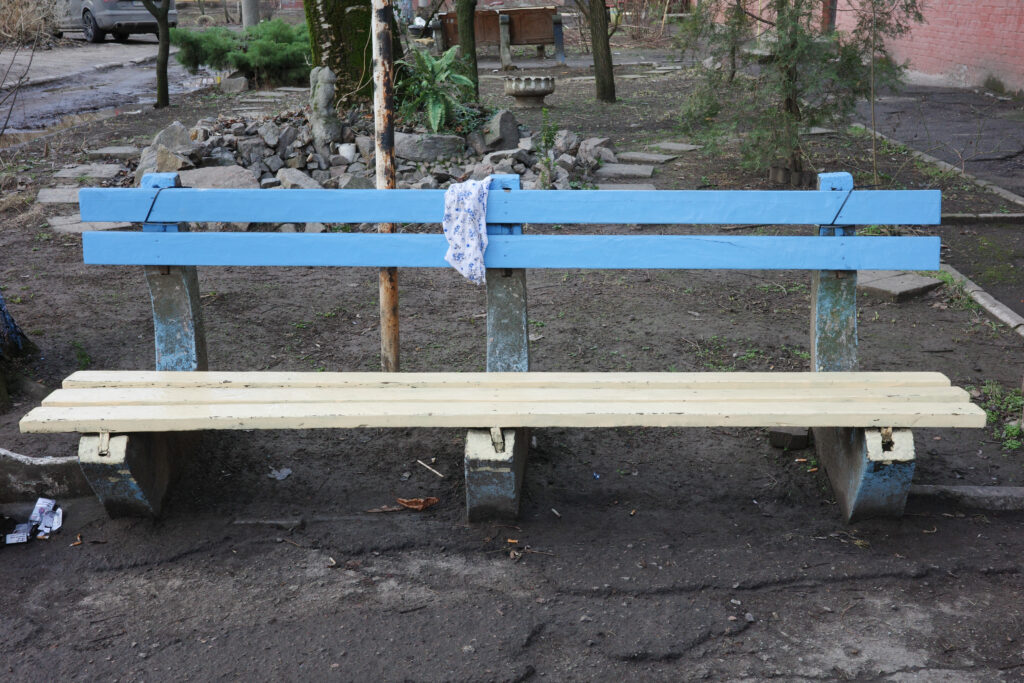
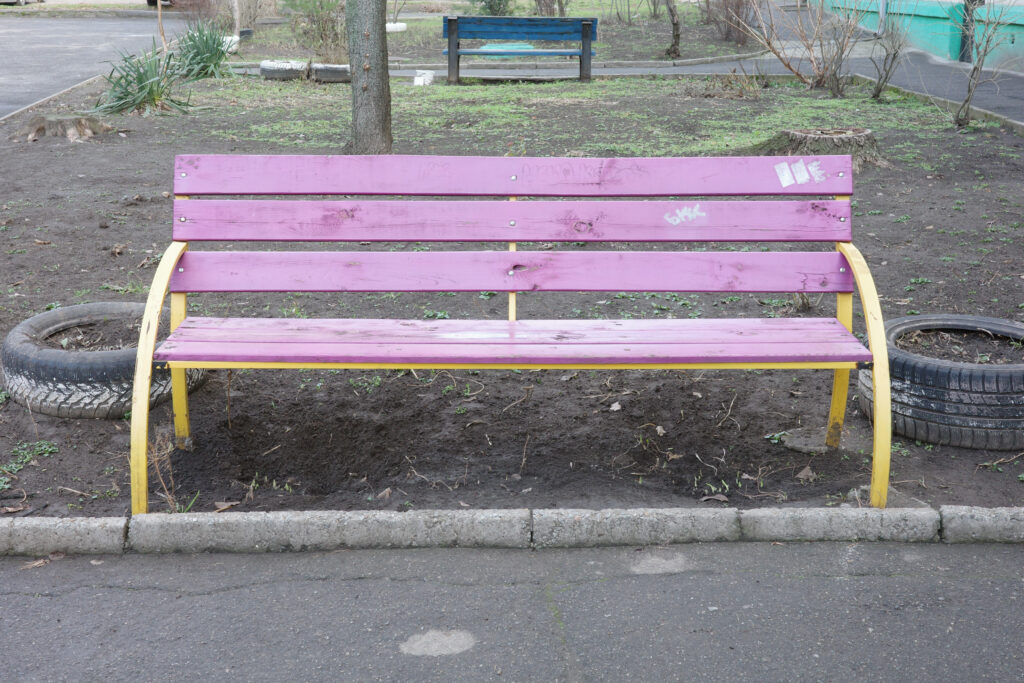
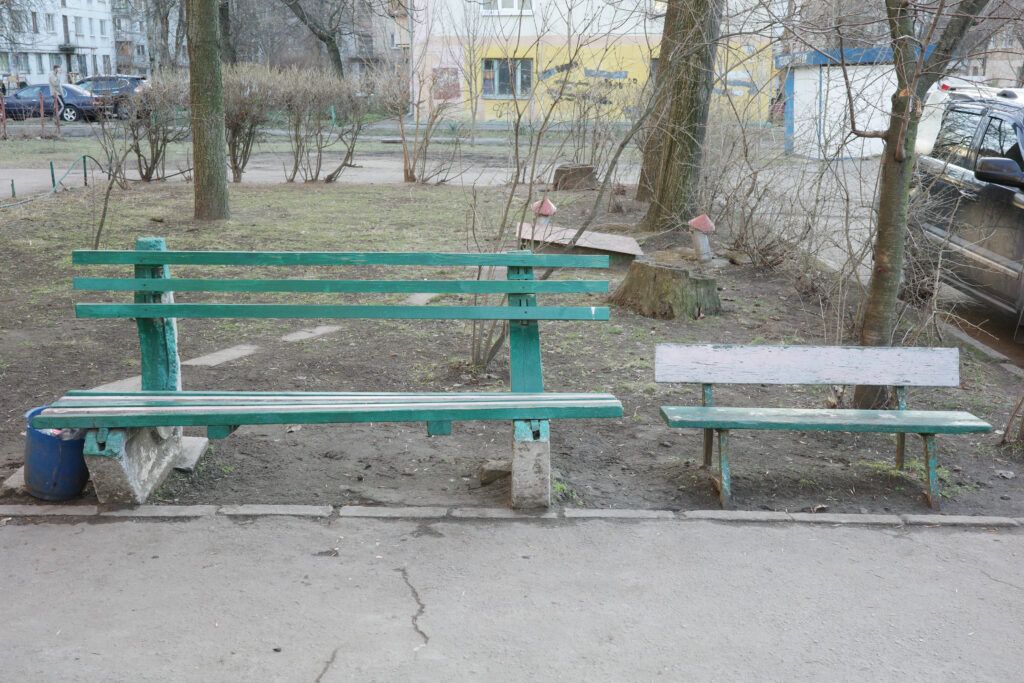
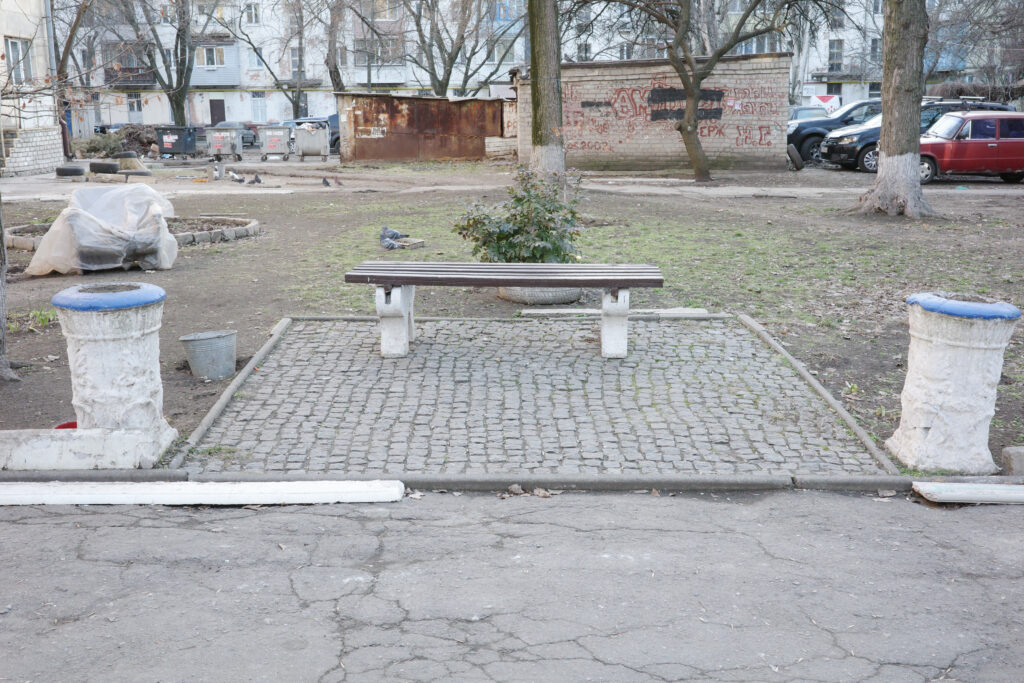
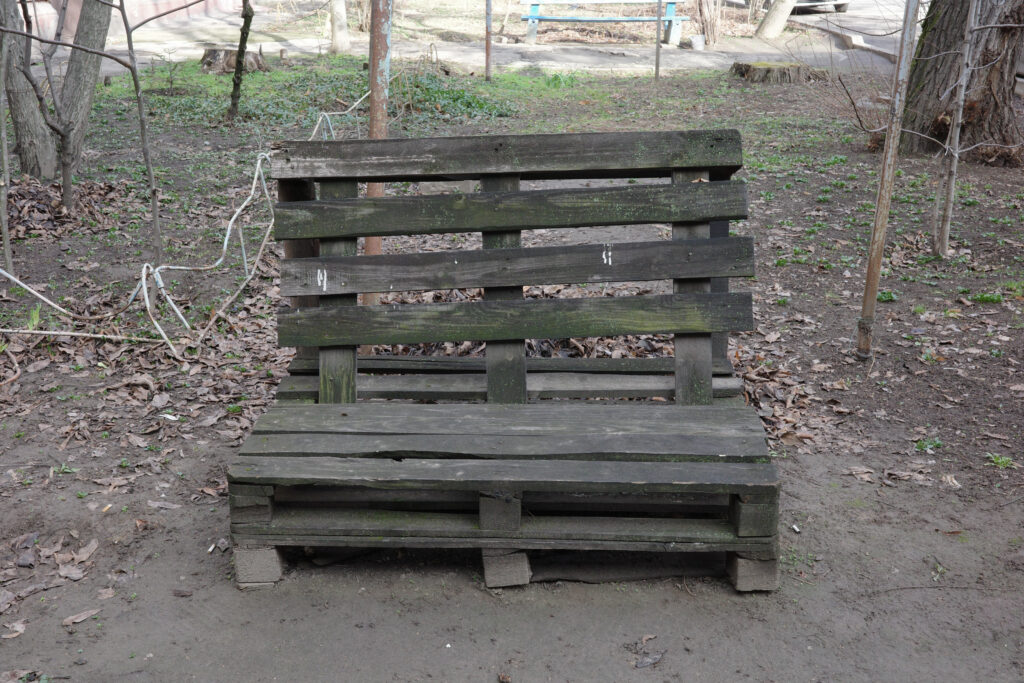
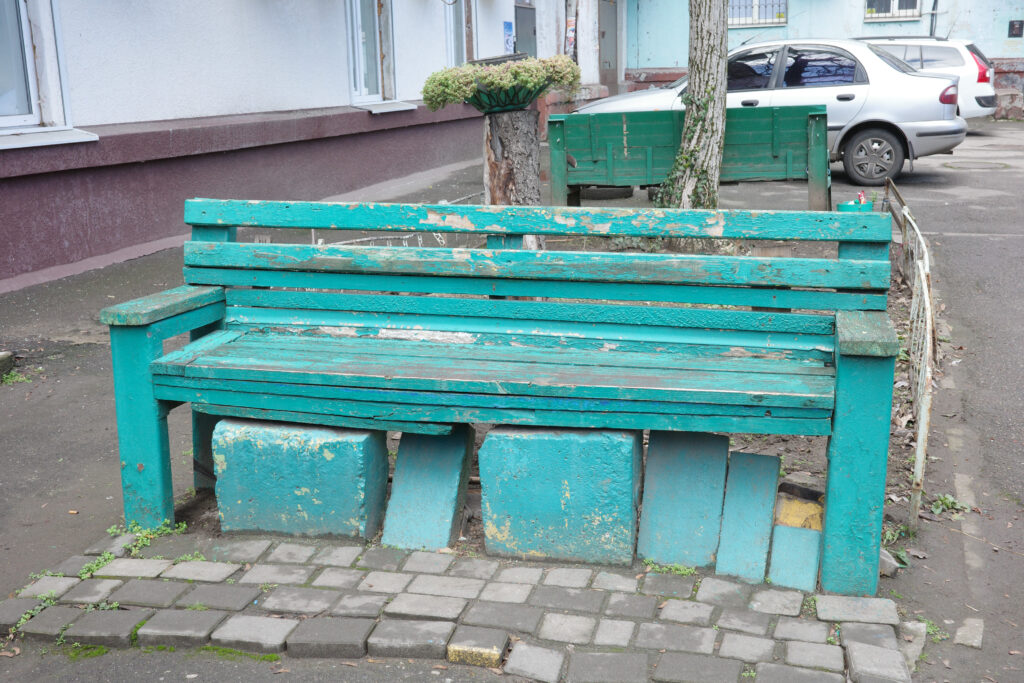
The Bench of Life is an ongoing series about one of the urban phenomena from the times of the Soviet Union. Often, a bench is an element of urban development near parks and bus stops, created for resting during long walks or waiting for transport.
In the USSR, urban infrastructure was organized in such a way that the bench became an element of the entrance to multi-story buildings. Life on the bench was around the clock. In the morning, mothers with children in strollers would sit on it. During the day, children played under the supervision of their mothers from the windows. Towards evening, grandparents played cards, dominoes, and chess. Nighttime was for romantic encounters, drinking, and fights.
Life in such a house began with a bench, and ended with a bench. The first walks in a stroller for a child took place right here. It was also here that the farewell to the deceased took place: stools were brought out of the house and the coffin was placed on them so that everyone who wanted could join in the farewell.
Many modern buildings no longer have such a relic, the design of buildings has changed and benches have gradually begun to disappear from our yards, but these atavisms have still been preserved in old buildings. If you look closely at these benches, you can notice many different architectural solutions in their creation. There are different colors and shapes, to which homemade elements are added for greater convenience or beauty, which is why the bench begins to have its own character and live a separate life, competing with other benches for its originality.